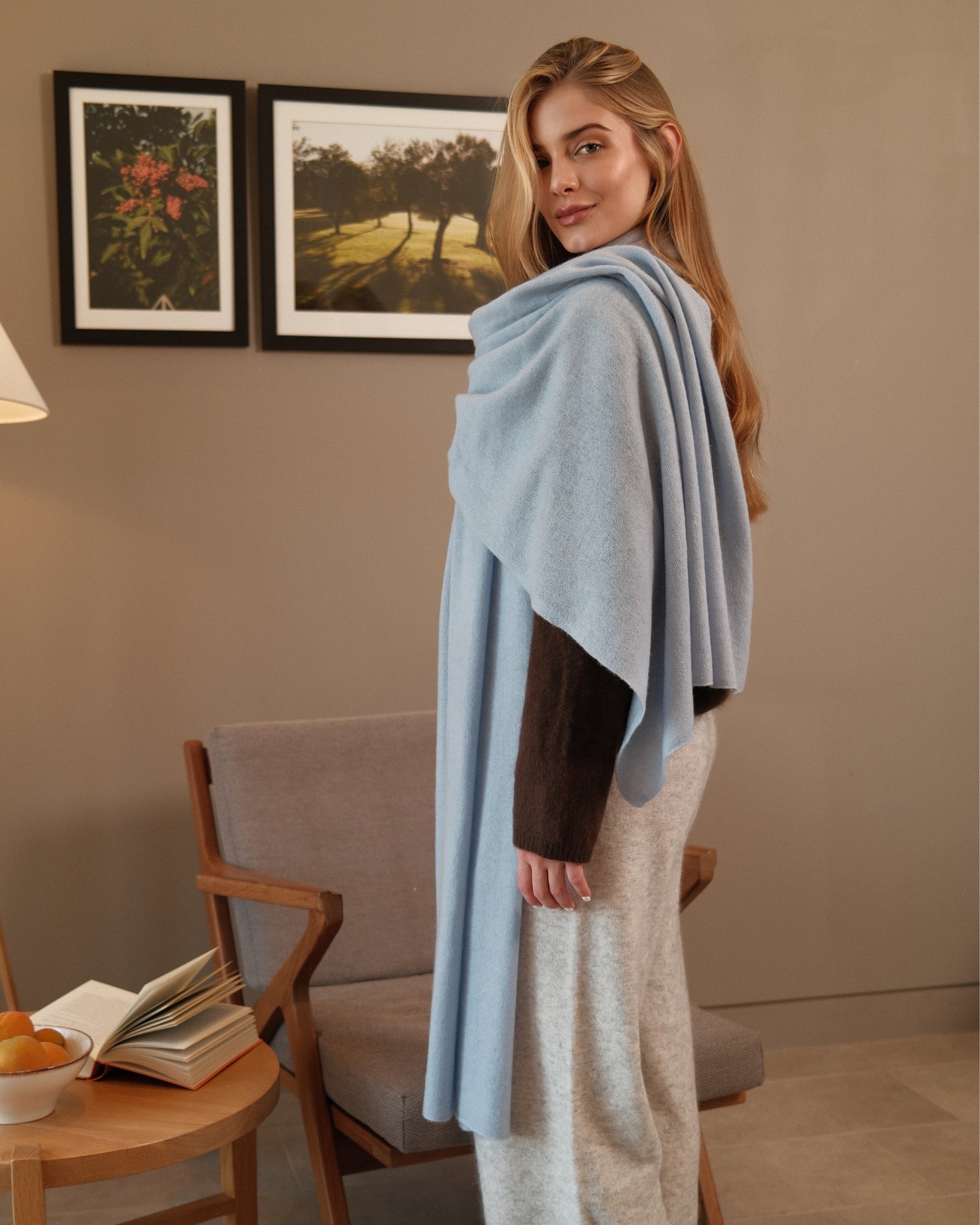
Why cashmere is especially gentle on the skin
Anyone with sensitive skin knows the problem with wool: it itches. With cashmere it is different — and the reasons are physical, not marketing.
Why wool itches
Itching happens when fiber ends are stiff enough to irritate the skin. Whether a fiber does that depends on its thickness, measured in microns. From around 30 microns the ends are so rigid that they stand on the skin instead of bending — the nerves report “prickle”, however fine the wool is otherwise. Classic virgin wool is often above 25 microns, with part of the fibers above that. Those are the ones you feel.
Fine fiber, no itch
Cashmere sits at 14 to 16 microns and is therefore so fine that the ends give way instead of prickling. That is not a matter of finishing but of the fiber itself: a cashmere sweater doesn’t itch because it can’t. That is why a V-neck or a triangle scarf can be worn right against the skin — where you would notice at once.
And merino?
Merino sits at 17 to 24 microns — considerably finer than classic virgin wool and flatter on the skin. In our 95/5 blend two things are added: the yarn is brushed, the fiber ends are raised and lie soft instead of standing up. And the cashmere share brings the softness. Those who itch with wool usually get on well with brushed merino-cashmere; those who are very sensitive choose pure cashmere.
Temperature regulation
The fiber is hollow and absorbs moisture without feeling damp. It warms when it is cold and doesn’t trap heat in an overheated room. For the skin that means: no sweating under the sweater, no damp climate in which irritation starts. Cashmere lies dry, all day.
“Wool allergy”
What often passes for a wool allergy is usually irritation from coarse fiber ends — or a reaction to lanolin, the sheep’s wool grease. Cashmere is goat hair: no coarse ends, hardly any lanolin. Those who get red patches from sheep’s wool tolerate cashmere without trouble in most cases. With a genuine allergy, the doctor decides, not the sweater.
Without chemistry
We dye without bleach. Less finishing on the fiber means less that can irritate the skin. Our light colors come from light raw fiber, not from bleached dark fiber. And the surface is not treated with softeners afterwards — what you feel is the fiber.
Keeping it that way
Care plays its part. Regular detergents contain enzymes and fragrances that stay on the fiber; fabric softener lays a film over it. Both can irritate sensitive skin — and both are unnecessary. Wool detergent, cold, rinse clear, dry flat: that keeps cashmere as gentle as on day one. The care guide.
In short
- Itching comes from fiber ends above around 30 microns — cashmere sits at 14 to 16
- Brushed merino-cashmere: comfortable for most; pure cashmere for very sensitive skin
- Hollow fiber: warms without trapping heat
- Hardly any lanolin, dyed without bleach
- Care with wool detergent, without softener