In conversation with Marlen: the founder behind SAINTE MER
SAINTE MER is owner-run — from day one. A conversation with founder Marlen about the path that led there, about a single material, and about why she still does every fitting herself.
How did SAINTE MER start?
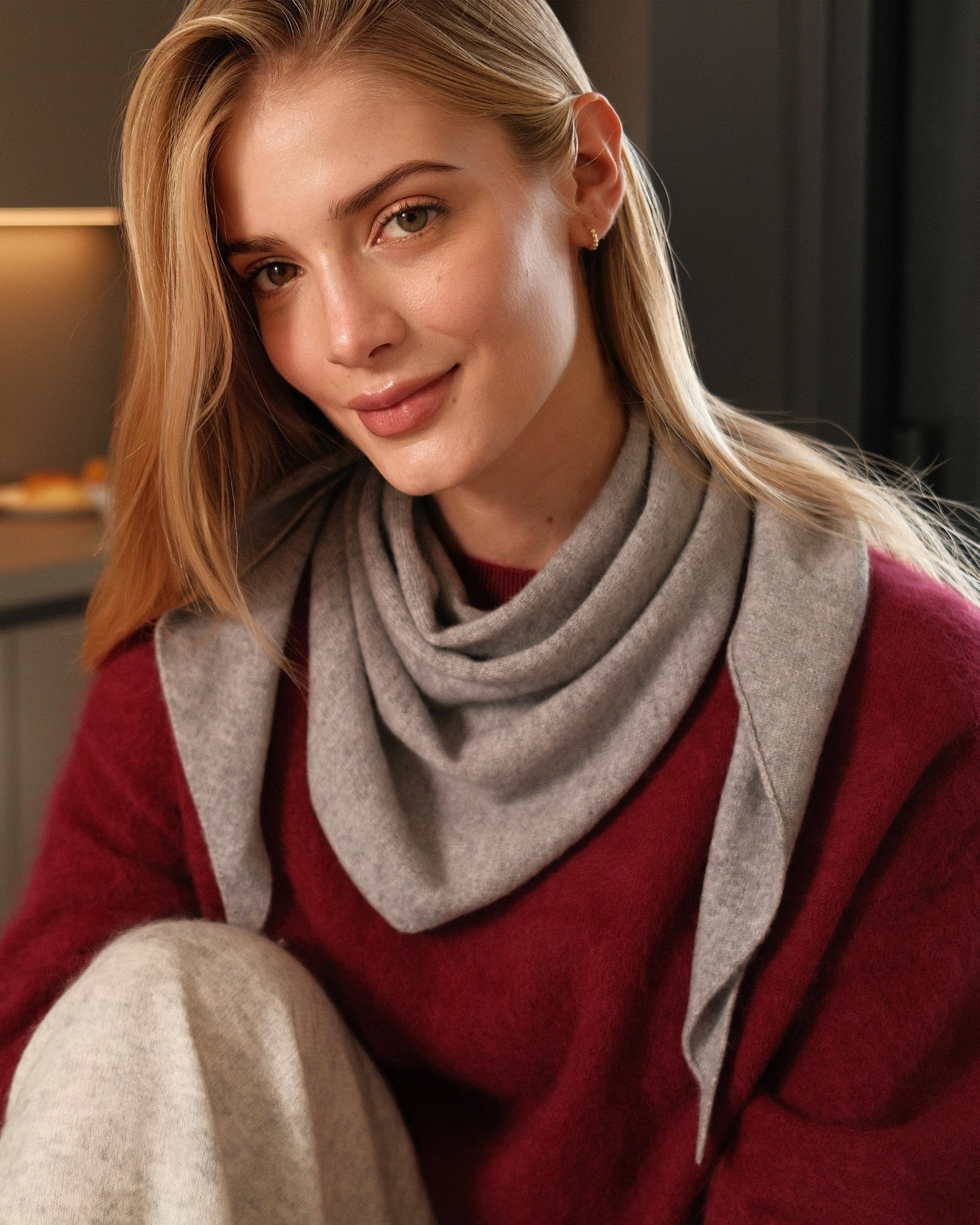
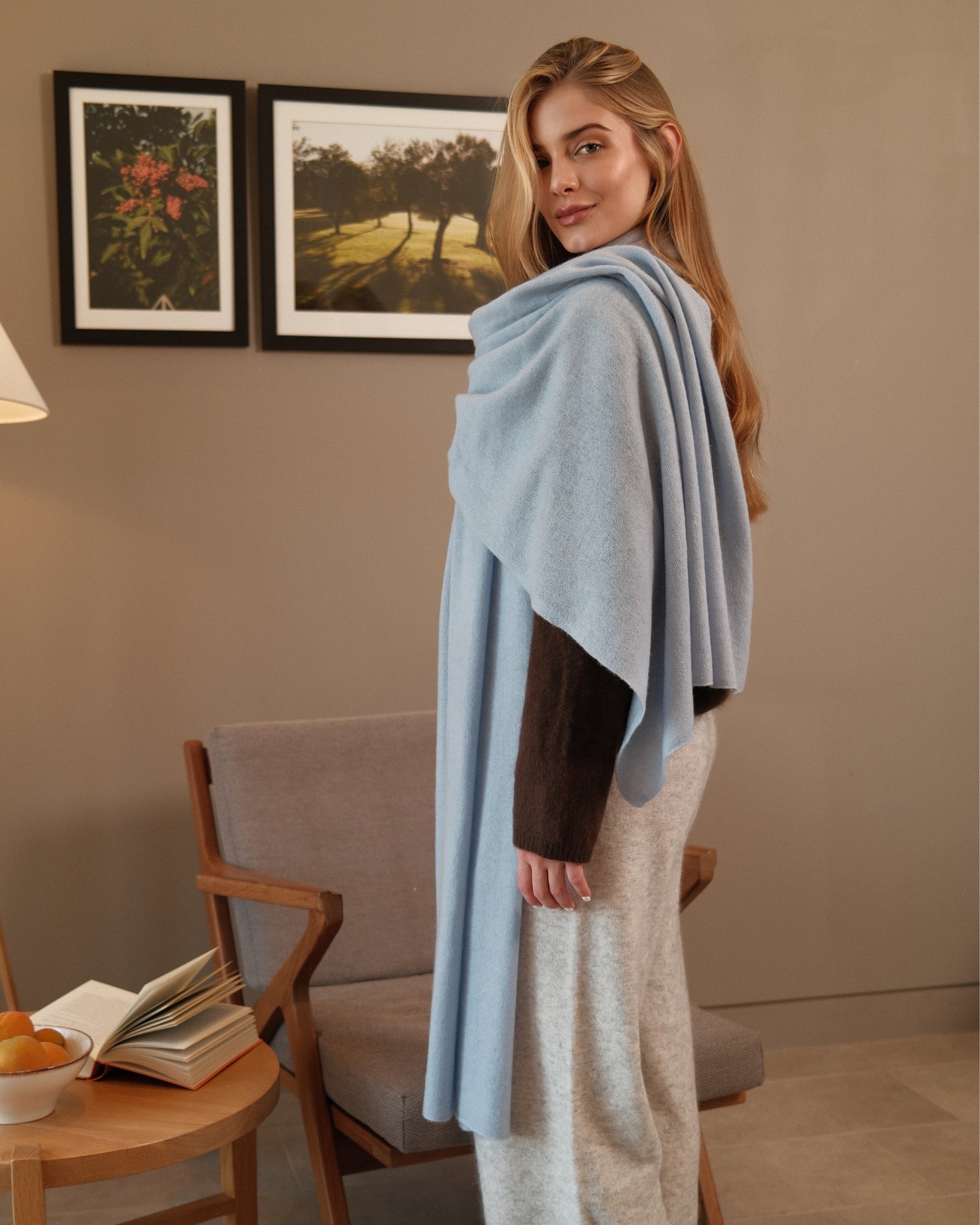
With scarves. There was nothing I liked better than buying myself a new scarf or two in winter — it is the easiest way to give a good coat you’ve had for years a new look. For me a scarf in winter is a loyal companion, like a best friend. So we started with one large cashmere scarf, in a few colors. That became thirteen colors, then beanies, then sweaters.
And before that?
Seventeen years in the international fashion world — in buying, in production, in building collections, at large fashion houses and online platforms. Before that, fashion and management in England. In those years I learned how collections come about and how they are sold. And I saw where quality gets lost in volume: at every point where someone takes a shortcut.
Why only one material?
“If you do everything, you can’t do anything really well.” Cashmere forgives no shortcuts: yarn, gauge, dyeing — at every step it is decided whether a piece lasts five winters or one. If you make only one material, you know every one of those steps. That is why there is no cotton and no silk at SAINTE MER.
Where does the yarn come from?
We source only the longest and finest Grade-A fibers. The origin is documented and traceable via a code — from the source through the spinning mill to the finished piece. On some pieces the yarn maker’s tag hangs right on the garment. I don’t want to have to believe it; I want to be able to look it up.
Why merino with cashmere now as well?
Because there are pieces that work every day. A crewneck that goes with jeans, tailored trousers and a skirt. Knit pants for home, the plane, the weekend errand. For pieces like that, merino holds its shape better and is more hard-wearing; the cashmere share brings the softness. And then the yarn is brushed: the fiber ends are raised, the surface turns fluffy, cloud-soft. The luxury is in the surface. Pure cashmere remains the finest — for the scarf, the triangle scarf, the light sweater.
How does a collection come about?
Small. A few shapes you wear year after year, in colors that stay — black and navy have not lost their relevance in seventeen years of buying. Every collection passes through my hands, from yarn selection to the final fitting. I do the fitting myself because on the body you see what isn’t on paper: whether a shoulder ends softly on the arm or cuts it off, whether a waistband holds without digging in. Knit pants stand or fall with the waistband.
What do you wear yourself?
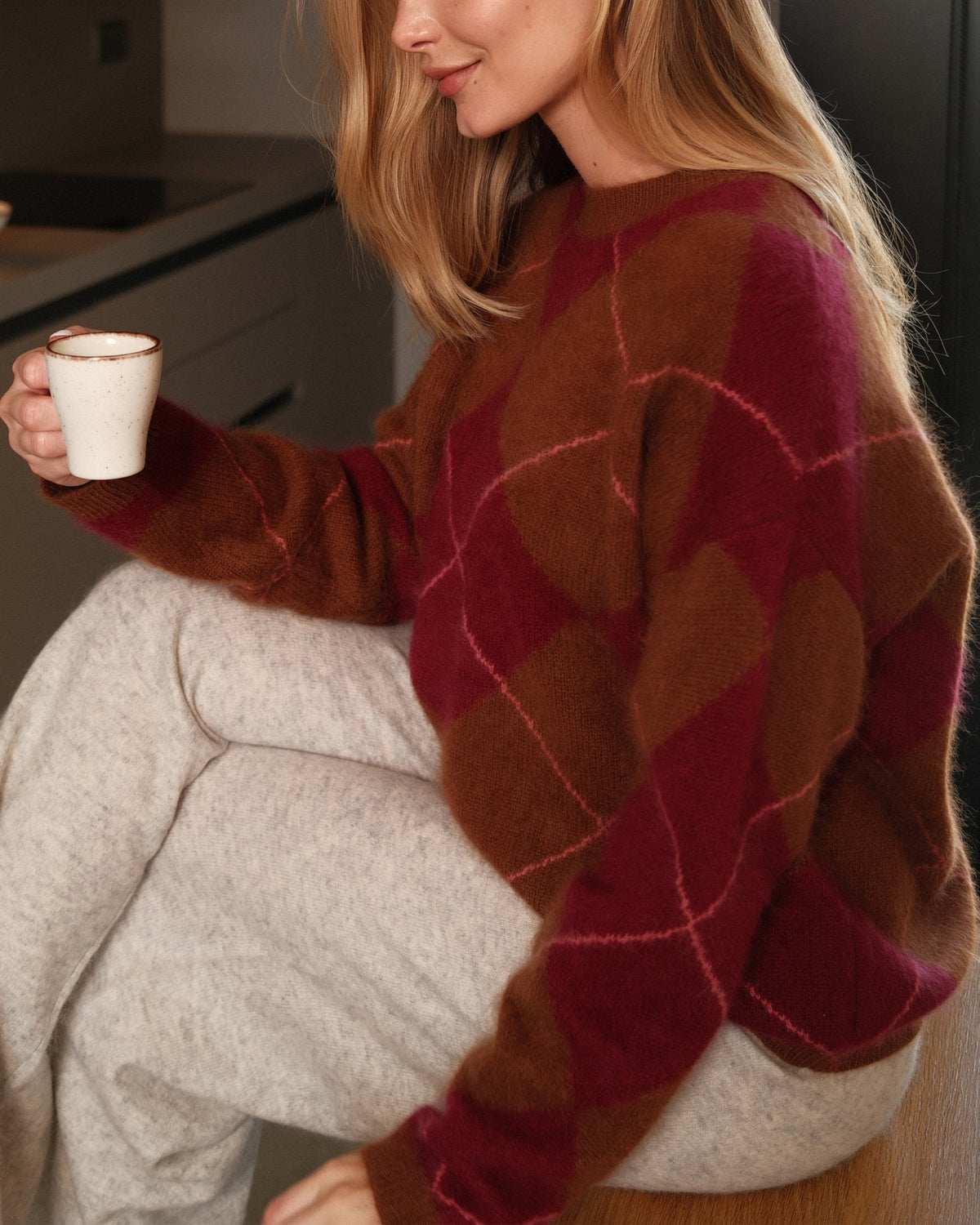
The argyle crewneck — after seventeen years of buying, that is the argyle I most like to wear myself. The brushed cardigan in Chocolate, practically every day: with jeans, with tailored trousers, on the sofa in the evening. And this season the crewneck in Mokka, with natural-colored trousers and loafers.
What remains
15 years of cashmere expertise, headquarters in the EU, shipping from our German warehouse. And the fitting I still do myself. A piece that stays with you for years is the most honest form of sustainability — nothing about that has changed since the first scarf.