Why cashmere? What sets the fiber apart from wool
Cashmere is not sheep’s wool. It is the undercoat of the cashmere goat — and that one difference explains almost everything that sets cashmere apart: the weight, the warmth, the handle, the price.
Undercoat, not fleece
The cashmere goat winters on the high plateaus of Central Asia, at temperatures down to minus 30 degrees. For that, a fine, dense undercoat grows beneath its coarse outer hair. In spring it is combed out, not shorn — around 150 grams per animal a year. A sheep gives many times that. It is the reason cashmere is rare, and the reason it feels different. More on where the fiber comes from.
Finer than any wool
The fineness of a fiber is measured in microns, thousandths of a millimeter. Classic virgin wool is usually above 25 microns, merino between 17 and 24, cashmere at 14 to 16. The difference sounds small and is decisive: from around 30 microns, fiber ends are stiff enough to irritate the skin. Below that they give way instead of prickling. That is why wool itches — and cashmere doesn’t, even on sensitive skin. Why cashmere is gentle on the skin.
Warm without weight
The cashmere fiber is hollow inside. These air chambers hold body heat — which is why cashmere warms at a fraction of the weight of wool. A cashmere sweater rests on the skin instead of weighing on the shoulders.
At the same time the fiber absorbs moisture without feeling damp, and releases it again. It warms when it is cold and doesn’t trap heat in an overheated office. That makes cashmere the piece for the shoulder seasons and for indoors all year round.
It gets better, not worse
Most textiles look their best on day one. Not cashmere. It grows softer with wearing and washing, as the fiber relaxes and the surface opens up. After the first wash a sweater feels different from new — and that is intended. Pilling is part of the beginning and eases off. A Grade-A piece costs more to buy and less per day worn.
Cashmere or merino-cashmere?
We knit both, and both have their place. Pure cashmere is the finest and lightest — the large scarf, the triangle scarf, the fine sweater with the quiet handle only real cashmere has.
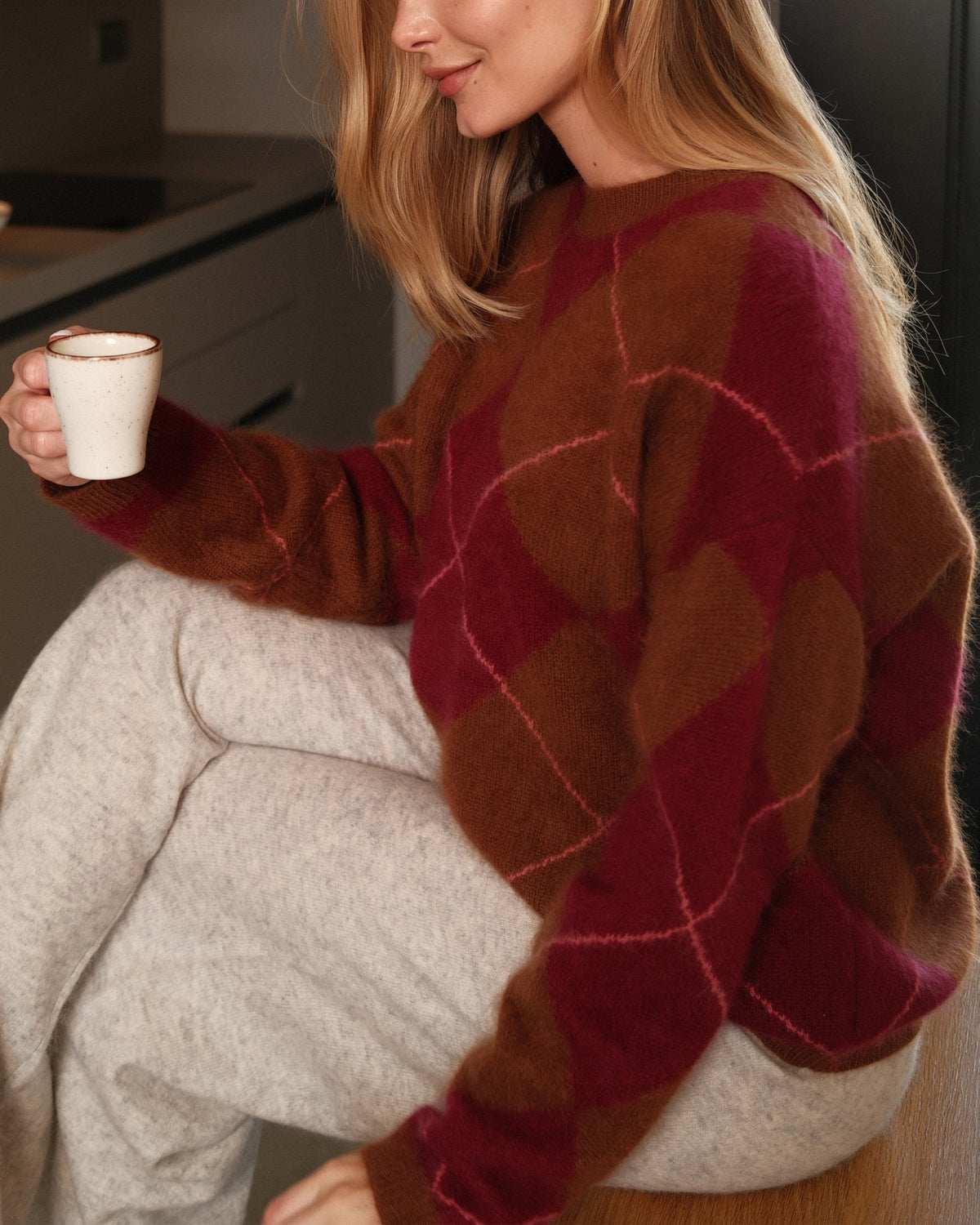
95% merino wool with 5% cashmere is the blend for pieces that are worn often and washed often: merino holds its shape better and is more hard-wearing, the cashmere brings the softness. The yarn is brushed as well — the fiber ends are raised, and the surface turns fluffy, cloud-soft. For knit pants, an argyle or the sweater that works hardest in your wardrobe, that is the more durable choice.
How much cashmere is in “cashmere”?
The label is worth a look. “With cashmere” can mean anything — from five percent in synthetic fiber to a deliberately chosen blend like ours, merino for the shape, cashmere for the softness. What matters is what the rest is. And “100% cashmere” only tells you which fiber is in it, not how long it is or how densely it was knitted. How to recognize good cashmere.
What cashmere needs
Little. A day of airing between two days of wear, a cold hand wash now and then, dry flat, store folded. No hanger, no radiator, no tumble dryer. Everything else is in the care guide.